High-integrity safety components engineered for utility-grade arrays, certified to withstand elevated DC voltages and extreme environmental parameters.
In the current energy transition, grid-tied photovoltaic networks serve as the primary conduit for scaling industrial capacity and meeting demanding carbon-neutral mandates.
Grid-tied topologies operate by synchronizing generation arrays directly with local electrical utility networks, optimizing load sharing, and reducing dependency on auxiliary carbon sources. Across the European Union, the Americas, and rapid-growth APAC economic zones, grid-tied C&I integrations have transitioned from auxiliary installations to core infrastructural assets.
This paradigm shift demands extreme reliability from Balance of System (BOS) components. At the C&I scale, electrical faults do not merely represent minor localized dropouts; they present substantial risks of thermal runaway, catastrophic equipment degradation, and major financial liabilities. Modern operations necessitate high-voltage DC protection systems designed to isolate anomalies in milliseconds, preventing propagation to costly multi-megawatt central inverters.
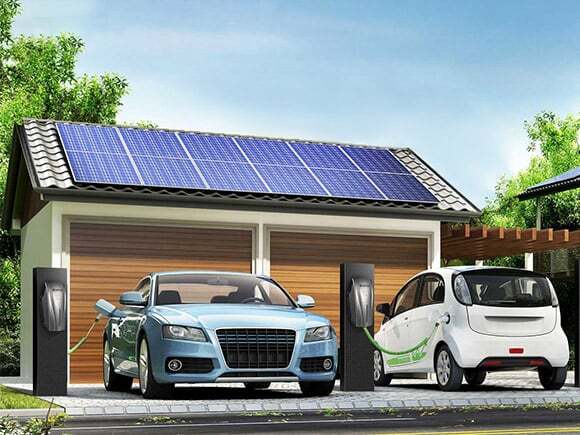
Foshan SDEV Charger Co., Ltd. sits at the intersection of electrical safety engineering and green mobility integration, with a legacy spanning over three decades.
"Quality is the primary goal across each of our workshops, ensuring optimal performance and safety for modern Solar, Storage, and EV charging ecosystems." — SDEV Quality Assurance Core Directive.
Leveraging over 30 years of specialized manufacturing experience in DC protection equipment, SDEV designs components that meet the latest international standards. Our deep understanding of high-voltage arc-extinguishing principles and thermal dynamics enables us to produce robust protection architectures.
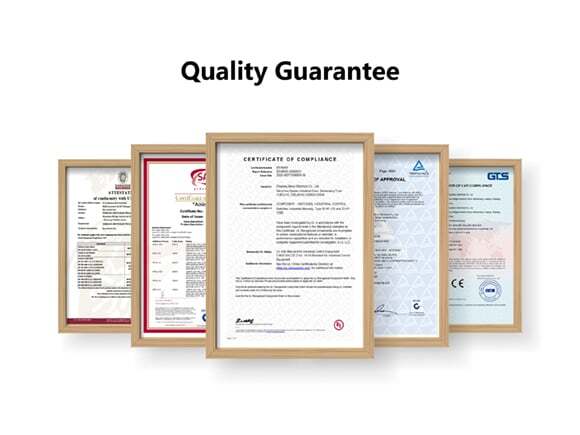
Our production processes align with top-tier international standards. Our manufacturing lines and products are fully certified under UL, SAA, CB, CE, TUV, ISO, and RoHS. This compliance guarantees cross-border technical compatibility and safety across all global markets.
Continuous innovation is driven by our specialized in-house R&D team. SDEV developed the first UL508i-listed patented DC switch in China, alongside the high-performance DC-PV2 DC switch optimized for the international renewable energy market.
China’s leadership in photovoltaic manufacturing stems from advanced supply chain integration, automated manufacturing, and deep clustering of high-purity raw materials.
China's manufacturing ecosystem enables SDEV to streamline the journey from raw material to certified component. In-house sourcing of high-conductivity metals, specialized engineering plastics (UL94-V0 flammability ratings), and customized manufacturing systems drastically reduce lead times. This allows us to scale production while maintaining tight mechanical tolerances.
Additionally, the concentration of key manufacturing clusters simplifies international compliance testing. Prototype revisions can be dynamically iterated, tested in-house under high thermal stresses, and finalized for external certification (UL/TUV) in fractions of the time required elsewhere. This operational agility directly translates into lower cost per watt for global EPC contractors, developers, and distributors.
A detailed examination of critical safety interfaces within modern grid-tied arrays, focusing on their electrical design and isolation performance.
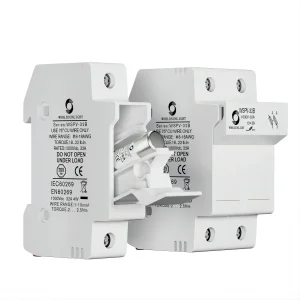
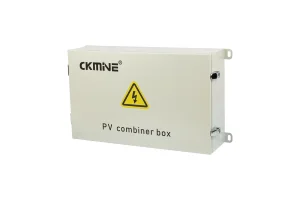
Within a combiner box, series-connected photovoltaic strings are consolidated into parallel distribution lines. SDEV’s Wspv-32 Gpv 10X38 1000V Fuse Holders are designed to house specialized gPV fuses. These components protect strings from low-overload currents associated with reverse-current faults in large arrays, preventing cell damage and localized combustion.
Utilizing high-strength materials with excellent thermal and dielectric properties, our fuse holders operate reliably under the continuous load profiles typical of large commercial utility installations.
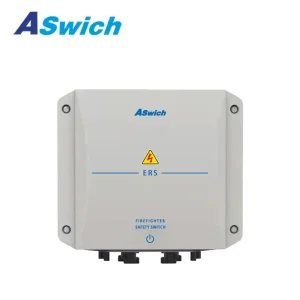
Compliance with safety regulations like NEC 690.12 requires rapid array-level voltage reduction. SDEV's Solar PV Array Level Rapid Shutdown Switch (1500V 55A) and residential safety isolators provide reliable, fast disconnection. These switches isolate high DC voltages directly at the module level when AC power is lost or manual emergency triggers are activated.
This functionality protects emergency personnel from electrical hazards, minimizing risks during building maintenance or emergency fire interventions.
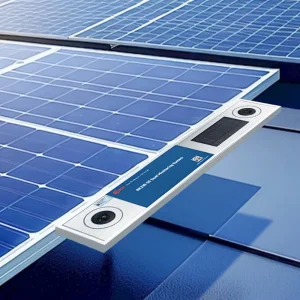
Modern utility arrays require intelligent monitoring to sustain peak yield. Our Dust Soiling Monitoring System features RS485 outputs and Modbus-RTU protocols, transmitting real-time performance data to SCADA control rooms. This system measures particle accumulation on panels, enabling site managers to plan cleaning schedules and minimize output loss.
When paired with SDEV's high-accuracy temperature acquisition expansion modules, operators receive a comprehensive view of operational data, supporting predictive maintenance and optimizing system performance.
SDEV's ongoing expansion into EV charging technologies addresses the growing demand for integrated commercial microgrids.
The rising adoption of electric vehicles requires charging stations that can interface directly with onsite renewable power. Utilizing local solar generation to power EV chargers reduces demand on the utility grid and minimizes conversion losses. SDEV leverages its extensive experience in DC protection to engineer charging solutions with robust built-in electrical safety.
Our EV integration products feature high-performance DC isolation and safety monitoring, ensuring stable power delivery. This integration helps facility owners maximize solar self-consumption while offering reliable charging services to fleets and visitors alike.

Key criteria and technical factors for procurement managers sourcing electrical components for C&I projects.
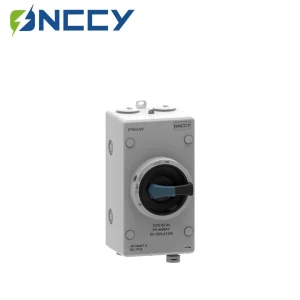
Unlike AC current, DC power lacks natural zero-crossing points, making electrical arcs difficult to extinguish. Disconnect switches must utilize specialized mechanical designs, such as magnetic blowouts or fast-break contact assemblies, to rapidly quench arcs. SDEV’s UL508i-listed switches are engineered to perform reliably under full-load conditions, preventing damage to downstream equipment.
Combiner boxes and fuse bases must withstand high operational temperatures inside sealed outdoor enclosures. SDEV uses premium plastics rated for high heat resistance and UL94-V0 self-extinguishing capabilities, ensuring the mechanical integrity of the components over long service lifetimes.
Solar installations face harsh conditions, from high-humidity coastal zones to dusty desert sites. Selecting components with IP65, IP67, or IP68 ratings prevents the ingress of water and fine dust, minimizing the risk of insulation degradation and ground faults over time.
Expert insights on photovoltaic safety standards, component selection, and system installation.
DC circuits do not have a zero-crossing voltage point like AC circuits, meaning that once an arc is initiated, it is continuous and difficult to extinguish. DC isolators utilize specialized contact geometries, magnetic arc-extinguishment, and spring-loaded mechanics to quickly pull contacts apart and quench the arc. Using a standard AC switch in a high-voltage DC application can lead to catastrophic failure or fire.
The UL 508i standard defines specific safety requirements for PV disconnect switches. It ensures the switch can safely handle overcurrent conditions and repeated manual operations under full load, preventing electrical failure. SDEV's UL508i patented switch offers compliance and reliable operation in challenging commercial applications.
Soiling on solar panels can significantly reduce system output. Our dust monitoring sensors measure light transmission losses and transmit this data via RS485 Modbus-RTU to the central management system. This enables operators to schedule cleanings based on actual site conditions rather than fixed schedules, optimizing operational costs.
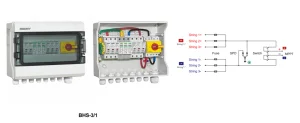
Our PV combiner boxes are equipped with high-capacity DC Surge Protective Devices (SPDs). These components divert transient surge currents caused by nearby lightning strikes safely to the ground, protecting sensitive inverters and downstream electronics from damage.
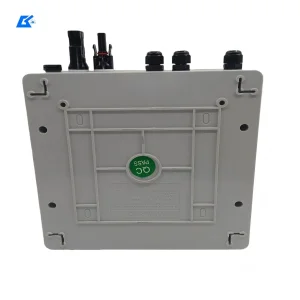
Yes. We manufacture customized configurations ranging from simple 3-in-1-out boxes for residential use to large 24-string configurations for utility installations, with voltage ratings up to 1500V DC. We configure isolators, fuses, and monitoring systems to meet specific project designs.
Complementary power, telemetry, and interconnection solutions engineered to maximize solar plant output and maintain system integrity.
 SDEV Charger