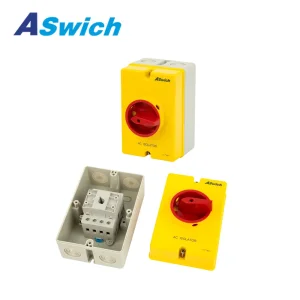
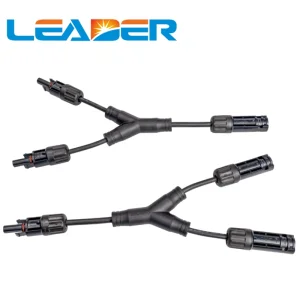
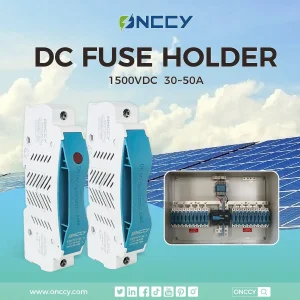
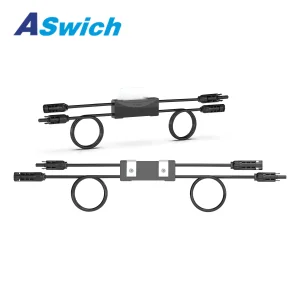
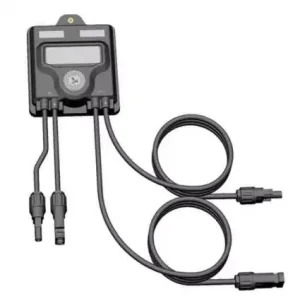
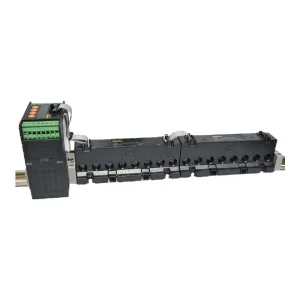
Essential circuit safety components designed to interface seamlessly with high-capacity Battery Management Systems and solar energy architectures.
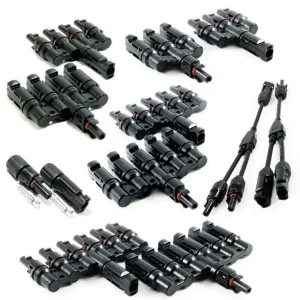
The global energy transition has elevated the Battery Management System (BMS) from a secondary protection circuit to the central intelligence hub of electrochemical energy storage systems (BESS) and electric vehicles (EVs). As megawatt and gigawatt-scale projects displace conventional power generation, the market demands unyielding system reliability, sub-millisecond fault mitigation, and extended battery cell operational lifespans.
Modern BMS architectures must address three persistent technical hurdles: total cell imbalance across long series strings, non-linear degradation under harsh thermal cycling, and high-voltage DC arcing hazards. The industry has shifted rapidly from basic passive-balancing topology to intelligent multi-tier architectures:
Unlike traditional passive balancing that dissipates excess energy as heat, modern active balancing redirects charge from high-voltage cells to lower-voltage cells via inductive or capacitive transfer, recovering up to 5-10% of usable pack capacity.
Utility-scale battery storage is migrating to 1500V DC architectures to reduce cable losses and balance-of-system (BOS) costs. This demands specialized isolation monitoring, high-clearance PCB trace design, and robust surge protection.
By coupling edge-computing microcontrollers on the BMS board with cloud digital twin models, operators execute real-time state-of-health (SoH) diagnostics and predictive thermal runaway alerts weeks before catastrophic failure occurs.
China has established an unrivaled dominance in the global battery energy storage value chain. Beyond simple cost efficiency, Chinese BMS manufacturers deliver speed-to-market, deep component supply chain integration, and extreme testing rigor. By tapping into localized clusters of automotive-grade Microcontroller Units (MCUs), specialized Analog Front-End (AFE) ICs, and high-frequency transformer fabrication, Chinese exporters deliver advanced customized BMS solutions at unmatched scale.
Industrial Heritage: Pioneers like Foshan SDEV Charger Co., Ltd. bring over 30 years of deep electrical research and manufacturing expertise in high-voltage DC protection components directly into the EV charging and battery management domains.
Foshan SDEV Charger Co., Ltd. represents the synthesis of legacy heavy-power electrical engineering and modern green technology. Leveraging 30+ years of background in creating protective components for global photovoltaic systems, SDEV manufactures DC switches, surge protective devices (SPD), and integrated management hardware fully compliant with stringent global DC standards.
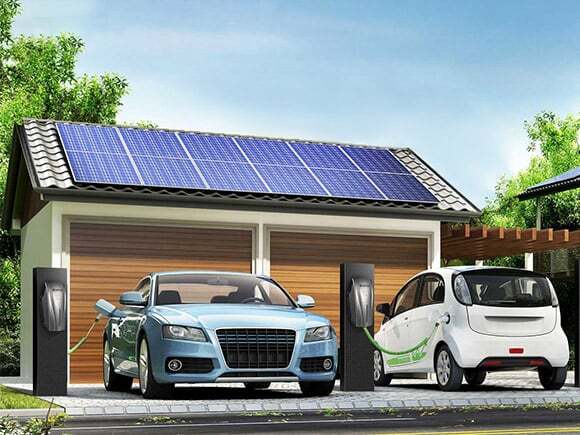
With an intensive dedicated in-house R&D team, SDEV engineered China's first UL508i-listed patented DC switch alongside specialized DC-PV2 switches built specifically for complex global grid topologies.
Quality guarantees seamless international integration. SDEV workshops operate under stringent compliance protocols certified across UL, SAA, CB, CE, TUV, ISO, and RoHS specifications.
From solar string monitoring and module-level disconnects to EV charger power management PCBs and battery combiner enclosures, China's manufacturing matrix ensures absolute system component interoperability.
A high-performance BMS does not operate in isolation; it functions inside an engineered matrix of circuit protection, disconnection devices, and communication hardware tailored to specific operational environments.
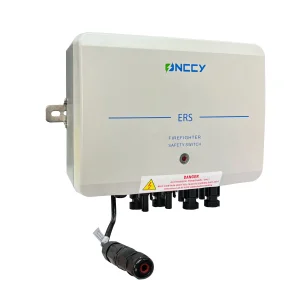
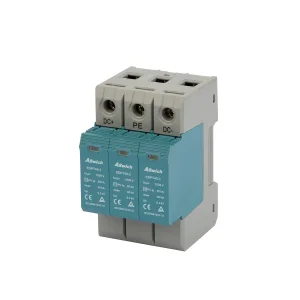
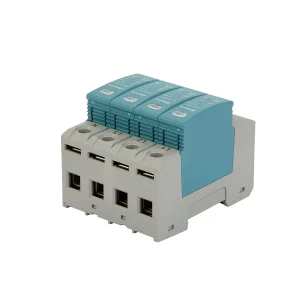
Containerized energy storage units operating up to 1500V DC require multi-layer master-slave BMS architecture. SDEV's 1500V 40A Firefighter Safety Switches and high-capacity surge protection devices (SPDs) safeguard these high-density cell banks against destructive overvoltage and thermal runaway cascades.
High-power DC charging stations (150kW - 360kW) demand continuous telemetry exchange between the vehicle's onboard BMS and the charger's controller. Integrated DC isolation monitoring, fast-acting fuses, and ruggedized power modules prevent cross-talk noise and fault currents.
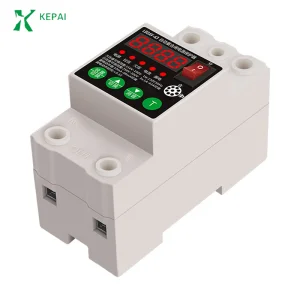
Roof-mounted solar PV integrated with battery storage requires precise string monitoring and automated rapid shutdown mechanisms. Digital display circuit breakers and IP65-rated waterproof isolators protect onsite personnel while maintaining continuous power stability.
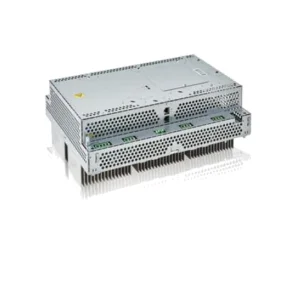
Heavy-duty industrial automated guided vehicles (AGVs) and robotic drive units (such as ABB DSQC drive units) depend on specialized high-efficiency DC power supply modules and ruggedized BMS logic boards to ensure zero interruption under dynamic vibration conditions.

Safety and reliable long-term performance dictate the success of any Solar, Storage, and EV Charging installation. Quality forms the bedrock across every SDEV workshop, reflecting directly in system longevity and elevated enterprise brand equity for global partners.
To fulfill global regulatory demands, SDEV manufacturing plants adhere to rigorous international auditing. Certified components carrying UL, SAA, CB, CE, TUV, ISO, and RoHS marks undergo rigorous thermal shock, extended dielectric withstand, overcurrent clearance, and environmental exposure testing before deployment.
Staying at the vanguard of clean-energy acceleration requires continuous alignment with changing market dynamics. SDEV's specialized in-house R&D team continuously develops next-generation safety switches, intelligent sensors, and DC protection units built for higher power densities.
This proactive R&D framework birthed the first UL508i listed patented DC switch crafted within China, alongside specialized DC-PV2 DC isolators created explicitly for overseas commercial deployments. Through cutting-edge PV protective hardware and EV charging support solutions, SDEV nurtures enduring strategic relationships with top-tier global renewable energy conglomerates.

As global power grids become increasingly decentralized, Chinese BMS exporters lead the integration of advanced technologies that elevate safety, accuracy, and operational lifecycle value.
Traditional Coulomb counting methods experience cumulative error drift over extended operation. Next-generation BMS chips incorporate Machine Learning (Neural Networks, Extended Kalman Filters) on-chip to maintain State-of-Charge (SoC) estimation within <1.5% accuracy under fluctuating operational loads.
Eliminating heavy, failure-prone copper wiring harnesses between slave modules and the central master unit, wBMS uses localized RF communication networks. This innovation reduces system weight, lowers structural manufacturing costs, and simplifies automated pack assembly.
High-voltage DC systems carry elevated risk of continuous electrical arcing upon connector looseness or insulation compromise. Integrated optical and high-frequency current sensors immediately disconnect string-level safety switches within milliseconds, suppressing fire hazards before escalation.
Selecting an OEM/ODM partner for commercial battery management hardware requires thorough engineering validation. Global EPCs, battery pack integrators, and industrial buyers evaluate prospective Chinese suppliers using the following critical metrics:
Industrial-grade components supporting scalable battery bank assemblies, rapid shutdown systems, and high-voltage DC protection.
Expert analysis addressing essential procurement, technical specification, and compliance questions for utility and commercial buyers.
 SDEV Charger