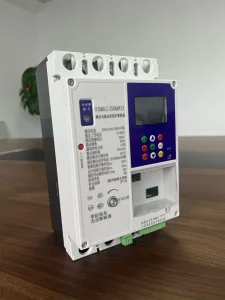
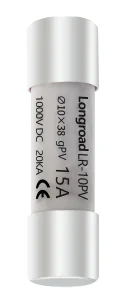
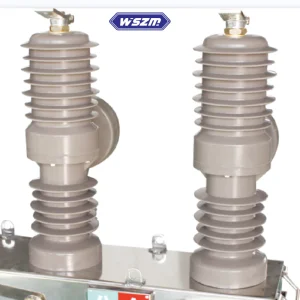
Ensure structural safety and continuous performance with our premium line of rapid shutdown devices, isolation switches, and DC fuses.
In the rapidly maturing landscape of renewable energy, the integration of hybrid solar-plus-storage topologies has emerged as a cornerstone of the global energy transition. Modern grid infrastructures demand not just clean power generation, but highly responsive, bidirectional power conversion systems (PCS) capable of peak shaving, load shifting, and grid stabilization.
At the heart of these modern microgrids is the hybrid inverter—a sophisticated device that manages power flows between solar photovoltaic (PV) arrays, battery energy storage systems (BESS), local loads, and the utility grid. As operating voltages push higher into the 1000V and 1500V DC regimes, the importance of robust balance-of-system (BOS) components and DC protection architectures becomes paramount.
This white paper outlines how premium component manufacturer Foshan SDEV Charger Co., Ltd. leverages over 30 years of industrial electrical expertise to supply the global market with the foundational safety components that power the world's top 10 hybrid inverter solutions.
Ensuring system durability and global market accessibility through certified protective components.
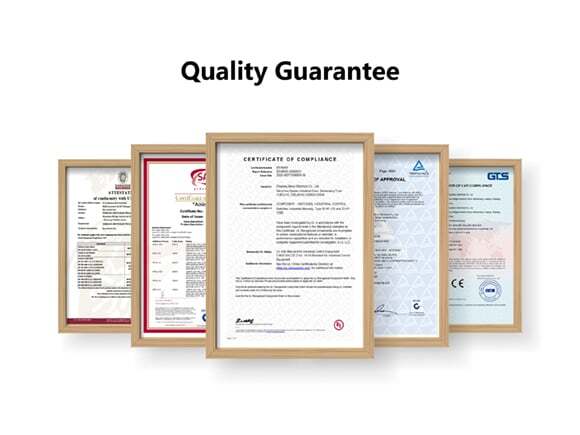
Quality is the primary goal among each of our workshops since this leads to the best performance and safety for any Solar, Storage, and EV charging system. When financial institutions assess utility-scale and commercial projects, the bankability of the selected hybrid inverter is directly correlated with its certifications and compliance records.
To achieve this goal, our manufacturing facility and products comply with UL, SAA, CB, CE, TUV, ISO, and RoHS standards. These certifications are not mere badges; they are absolute verifications of performance under extreme thermal and electrical stress.
Navigating the hybrid inverter market requires evaluating manufacturers not just on peak efficiency, but on their system integration, thermal performance, battery management system (BMS) compatibility, and structural protection options. The leading global brands utilize custom-engineered protection systems to maintain operational continuity.
Here is how the top ten hybrid inverter solutions are structured to deliver reliable, long-term performance:
Maximizes energy yield across complex commercial roof profiles and shading conditions, matching high-current inputs.
Support for both low-voltage and high-voltage lithium battery technologies with sub-millisecond switchover rates.
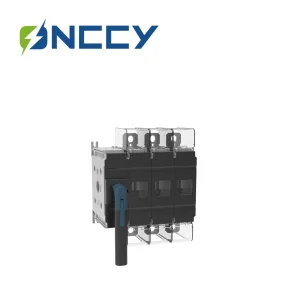
Utilizing high-performance components like SDEV's manual transfer switches and isolators directly within the enclosure.
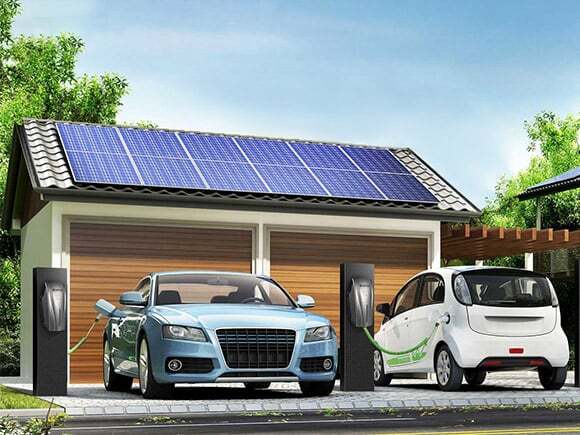
The global energy market is transitioning from simple PV-to-grid installations to complex, decentralized multi-energy systems. Modern commercial and industrial (C&I) clients demand solutions that integrate solar generation, battery energy storage systems (BESS), and electric vehicle (EV) charging networks under a single, cohesive power management protocol.
With the inheritance of 30+ years of experience in the research and production of DC protection products, SDEV is continuously dedicated to the EV charging field. In recent years, SDEV has attentively invested resources in research on EV-related products, successively manufacturing other types of products, thus reaping wide market popularity across the world.
By combining high-capacity hybrid inverters with dedicated EV charging piles and advanced battery storage, businesses can achieve complete energy independence, avoid high peak tariff penalties, and future-proof their commercial fleets.

The next decade of hybrid inverter development will be defined by smart grid interactivity, wider integration of wide-bandgap (SiC and GaN) semiconductors, and higher operating voltages. The migration from 1000V DC topologies to 1500V DC systems allows system designers to reduce wiring losses and overall balance-of-system (BOS) costs.
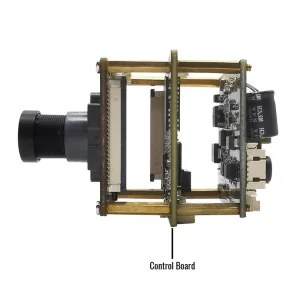
Moreover, artificial intelligence is reshaping predictive maintenance. High-definition monitoring, such as implementing smart AI camera modules (using Rockchip RV1126 chips), enables real-time visual inspection and remote diagnostic capabilities inside large substations. Thermal tracking, automated arc-fault detection, and switch position verification can now be verified remotely.
Achieving long-term quality control requires advanced manufacturing structures. Foshan SDEV’s production facility serves as an industry model, utilizing a "Factory 4.0" architecture. Through in-house R&D and integrated supply chains, SDEV has produced China's first UL508i listed patented DC switch, alongside specialized DC-PV2 switches designed for global distribution.
Automation in manufacturing guarantees component traceability, precision contact assembly, and consistent contact resistance values. By sourcing high-grade, UV-resistant, and flame-retardant materials, SDEV products are engineered to withstand extreme environmental challenges, from hot arid deserts to corrosive, salt-laden coastal atmospheres.
When procurement managers source materials for multi-megawatt hybrid installations, minimizing risk is the primary objective. Evaluating supplier capabilities requires a structured approach:
Ensure that all DC disconnectors, combiners, and fuses are rated for the open-circuit voltage (Voc) of the system under cold temperatures (up to 1500V DC).
Verification of local standards compliance (such as AS/NZS 5033 in Australia, NEC 690 in the US, and IEC 60364 in Europe).
Look for manufacturers that offer multi-year warranties (e.g., 5-year guarantees on combiner boxes) backed by bankable test reports.
Regulatory requirements vary significantly across global jurisdictions. For example, the United States National Electrical Code (NEC) dictates rapid shutdown capabilities at the module level (NEC 690.12) to protect emergency responders. Systems operating in Europe must conform to strict LVD (Low Voltage Directive) and EMC compliance checks.
Foshan SDEV ensures compliance across regional borders by developing local-ready solutions. Through close collaboration with global engineering, procurement, and construction (EPC) companies, SDEV provides custom labels, mounting arrays, and voltage ratings suited to specific local grid realities.
Essential guidance on hybrid inverter components, DC safety, and compliance requirements.
A traditional string inverter only performs one-way conversion of DC power from solar arrays into AC power for the grid. A hybrid inverter is a bidirectional power conversion system (PCS) that manages power flow from solar panels, battery storage (BESS), and the utility grid simultaneously, enabling backup power during outages.
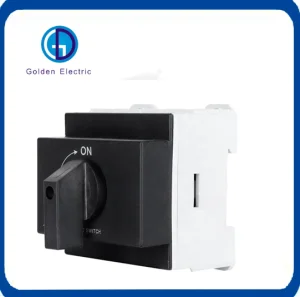
The UL 508i standard specifically outlines safety requirements for manual disconnect switches used in photovoltaic systems. Unlike AC circuits, DC circuits do not have natural zero-crossing points, making electric arcs much harder to extinguish. A UL 508i certified switch is tested to safely disconnect high-voltage DC loads without causing fire hazards or equipment damage.
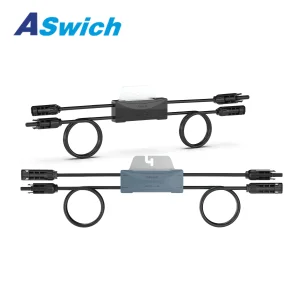
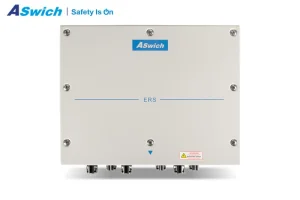
In standard PV arrays, high-voltage DC electricity remains present in the cables even if the inverter is turned off. Rapid shutdown devices, such as the Aswich ERP firefighter safety switches, disconnect the DC voltages right at the panel module level, lowering the total voltage of the array below 80V within 30 seconds of activation, protecting emergency responders from electrical shock.
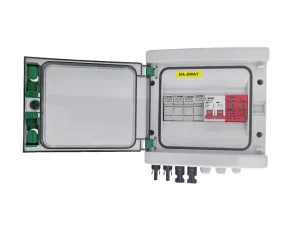
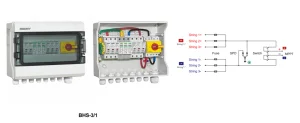
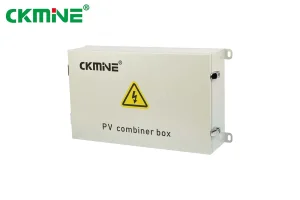
Combiner boxes pool multiple DC strings of solar panels into a single output that feeds into the hybrid inverter. They house essential safety equipment, including DC fuses for overcurrent protection, surge protection devices (SPDs) to guard against lightning strikes, and monitoring units that track string performance.
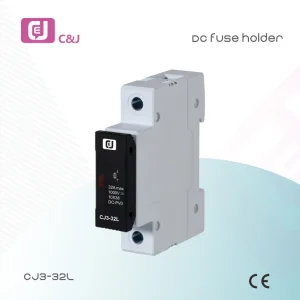
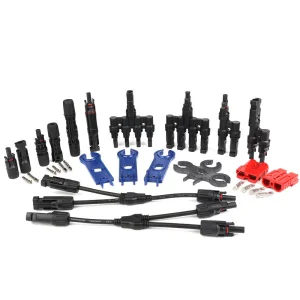
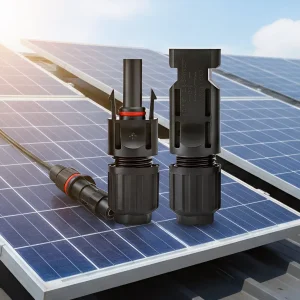
Premium connection interfaces, combiner boxes, and DIN rail fuse holders built for continuous outdoor operation.
 SDEV Charger