Why China Best Solar Arrays Need Multiple Protection Layers?

Time:2026-11-13 Author:Liam
0%

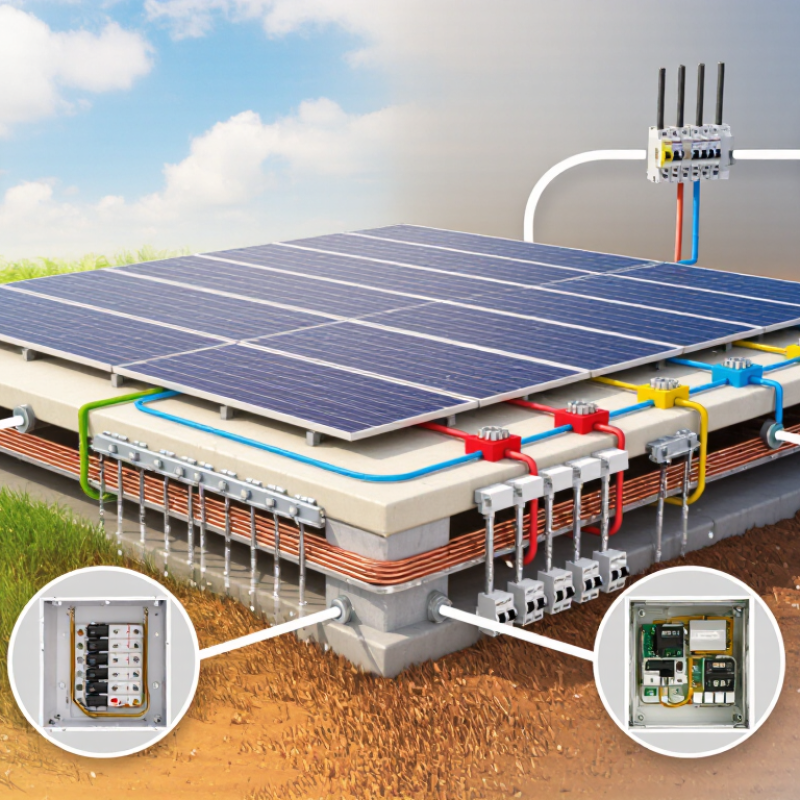
A solar array may look like a row of quiet glass panels, but it works in changing weather and carries electrical current every day. Heat, wind, moisture, dust, and wiring faults can each create different risks. One device cannot address them all. Why solar arrays need multiple protection layers is a practical question for anyone planning a dependable system, not just a technical detail for installers.

Protection usually combines well-matched components and sound installation. Fuses or circuit breakers can limit damage from excessive current, while surge protection can help guard equipment against voltage spikes. Grounding, suitable enclosures, and correctly rated cables add further safeguards. Each layer serves a specific purpose. Their value depends on the system design, equipment, and conditions at the site.

Details matter. A rooftop installation exposed to coastal air may need different materials from one in a dry inland location. Even a small cable connection deserves attention, because loose or poorly protected wiring can become a weak point. Regular inspection can reveal cracked insulation, corrosion, or debris before these issues grow. Still, protection is not a promise that failures will never happen. Components can age, and design assumptions can miss real conditions. That deserves honest review. This guide explores how layered protection supports safer operation, what common safeguards do, and why careful selection and maintenance matter for solar arrays in China. The aim is clarity, not a one-size-fits-all checklist. Each project needs a qualified assessment and components suited to its actual environment.
Why China Best Solar Arrays Need Multiple Protection Layers?

System Risk: Utility-Scale PV Strings Can Operate at 1,500 V DC

At 1,500 V DC, a utility-scale PV string can remain hazardous while sunlight reaches its modules. Unlike AC, DC has no natural current zero crossing to help extinguish an arc. A loose connector, damaged cable, or poorly isolated combiner can turn a small fault into sustained heat. That is not theoretical. NREL’s 2018 Best Practices for Operation and Maintenance of Photovoltaic and Energy Storage Systems identifies electrical faults and safe isolation as key operational concerns.

The scale is growing. IEA PVPS estimated that global PV installations in 2023 reached at least 407 GW, with an upper estimate of 446 GW in its Snapshot of Global PV Markets 2024. More large arrays mean more long cable runs, connectors, and exposed equipment to inspect. Protection should work in layers: string fuses sized for reverse-current risk, correctly rated DC disconnects, effective grounding, and monitoring that flags abnormal current or temperature. Each layer addresses a different failure; none replaces careful installation.

On site, a technician may find a sunlit module still producing voltage after an inverter stops. That detail is easy to overlook. I would also question designs that rely on a single alarm: sensor placement, damaged wiring, or delayed maintenance can leave faults unnoticed. Protection plans need clear isolation steps, verified component ratings, and inspections that follow the real layout—not just the drawing.

Module Safety: IEC 61730 Sets Electrical and Fire-Safety Requirements

Solar modules spend decades outdoors, where moisture, heat, and wiring defects can turn small weaknesses into serious hazards. IEC 61730 sets design and testing requirements intended to address electrical shock and fire-related risks. Its construction requirements cover features such as insulation, clearances, and protective barriers. Its tests check whether safety measures hold under defined conditions. Small details matter. A cracked junction-box cover or a cable rubbing against a sharp rail can undermine an otherwise well-designed installation.

Fire safety is not just a module issue. IEC 61730 evaluates safety through prescribed tests, but no test can represent every rooftop, mounting system, or climate. That distinction is easy to overlook. On a sun-heated roof, poor cable routing may create risks that a module’s test results cannot prevent. Installers should check labels, connectors, and mounting instructions, and use modules suited to the intended application. It is tempting to treat a compliance mark as the whole answer. It is only one useful piece of evidence; the applicable standard edition and local installation requirements also deserve careful review.

Why China Best Solar Arrays Need Multiple Protection Layers? - Module Safety: IEC 61730 Sets Electrical and Fire-Safety Requirements

Protection layer Hazard addressed Typical design or control IEC 61730 connection Example verification focus
Electrical insulation Electric shock and unintended current paths Insulating materials and suitable spacing between live circuits and accessible or grounded parts Part 1 addresses module construction; Part 2 includes electrical safety qualification tests. Insulation integrity and dielectric withstand, as applicable to the design and test sequence
Moisture protection Leakage current, corrosion, and insulation deterioration in wet conditions A sealed, weather-resistant laminate and appropriately protected electrical connections The safety qualification evaluates electrical safety under specified environmental test conditions. Wet-leakage testing and relevant environmental conditioning
Enclosure and connection protection Exposed conductors, loose connections, and water or debris reaching live parts Secure junction-box construction, insulated terminals, strain relief, and compatible cable connections Construction requirements and applicable tests assess safety-related module components and connections. Inspection of construction, terminations, and connection robustness
Grounding and bonding Hazardous voltage on accessible conductive parts where protective grounding is used A suitable bonding path and grounding provision for module designs that require or provide one The standard evaluates relevant grounding-related construction and continuity requirements. Ground-continuity checks where applicable
Thermal and hot-spot control Localized overheating that can damage materials or increase fire risk Cell-string design and bypass diodes selected to limit the effects of specified shading or fault conditions Part 2 includes thermal safety tests, including hot-spot and bypass-diode-related evaluations as applicable. Temperature behavior under specified test conditions
Mechanical and material integrity Cracks, damaged insulation, or exposed live parts after mechanical or environmental stress A module structure and materials designed to retain electrical protection during intended service conditions Safety qualification combines construction assessment with prescribed tests relevant to the module design. Applicable mechanical-load, impact, or environmental conditioning tests
Fire-related safety Ignition or fire spread associated with module materials and electrical faults Materials and construction selected to meet the applicable module safety and fire-classification requirements IEC 61730 addresses module safety, including fire-related requirements and tests specified by the applicable edition and market. Applicable fire testing or classification; requirements depend on the standard edition and intended application

Important: IEC 61730 qualification evaluates module safety against specified requirements and tests; it does not eliminate all risks or replace correct system design, installation, inspection, and maintenance. Applicable requirements depend on the standard edition, module construction, and local regulations.

String Protection: IEC 60269-6 Covers Fuses for PV Reverse-Current Risks

As solar arrays grow, parallel strings can feed fault current into a damaged string. That reverse current may exceed a module’s rating before the fault is obvious. The risk deserves attention:

IRENA’s Renewable Capacity Statistics 2024 reports about 346 GW of solar capacity added worldwide in 2023. More strings mean more potential current paths.

IEC 60269-6 sets requirements for gPV fuse-links used in photovoltaic systems. Properly selected string fuses can interrupt reverse-current faults and limit damage to modules and wiring.

Check the array’s short-circuit current, maximum system voltage, ambient temperature, and module maximum-series-fuse rating. The fuse must also suit the expected fault current.

Small parts matter. A fuse chosen only by nominal current can be a poor fit; I have seen calculations look tidy while overlooking heat inside a crowded combiner box. Installation details matter too.

Confirm the protection scheme against the system design and applicable electrical requirements.

A fuse is not a cure-all. It cannot replace sound cable sizing, secure connections, or regular inspection.

Surge Protection: IEC 61643-31 Covers DC SPDs Rated up to 1,500 V

IEC 61643-31:2018 sets requirements and test methods for surge protective devices (SPDs) on photovoltaic systems’ DC side, at rated voltages up to 1,500 V DC. That range matters as utility-scale arrays grow: IEA PVPS’s Trends in Photovoltaic Applications 2024 estimates global installed PV capacity reached roughly 1.6 terawatts by the end of 2023. More modules mean longer cable runs, which can pick up induced surges during nearby lightning strikes. Small details matter.

On a real installation, an engineer checks the SPD’s maximum continuous operating voltage against the array’s cold-weather open-circuit voltage. The protection level must also suit the inverter’s withstand rating. An SPD beside the inverter may not protect a distant combiner box equally well; cable length and routing affect coordination. IEC 61643-31 provides a common testing basis, but it does not make every device suitable for every layout. Not by itself.

Equipment selection and installation still need site-specific review, including earthing arrangements and the manufacturer’s instructions. One detail is easy to overlook: a correctly rated SPD can still leave a gap if the protection layers are poorly coordinated. That deserves a second look.

Inspection and Maintenance: IEC 62446-1 Defines PV Testing and Verification

For large solar arrays in China, protection depends on more than fuses and surge devices. Regular inspection helps reveal loose terminals, cracked insulation, water ingress, and hot spots before they become costly failures. IEC 62446-1 specifies documentation and commissioning verification for grid-connected PV systems, including visual checks, polarity, protective conductor continuity, and insulation resistance testing. These checks create a useful baseline for later comparisons.

Field performance deserves attention. A 2013 review by Jordan and Kurtz in Progress in Photovoltaics examined nearly 2,000 reported PV degradation rates and found a median rate of about 0.5% per year. That is a fleet-level finding, not a promise for every site. Gradual losses can be easy to miss when monitoring data is incomplete. Real sites are messier than checklists; dust, heat, and rushed repairs complicate diagnosis.

Tips: Keep test records by inverter and string, and compare them with commissioning results. Investigate repeated alarms and unusual temperature differences. IEC 62446-1 supports verification, but it does not replace a site-specific maintenance plan. Small faults spread. A checklist helps, but only when technicians record what they actually find.

FAQS

Why can a photovoltaic string remain hazardous after an inverter stops?

Sunlit modules may still produce dangerous DC voltage. DC lacks AC’s natural current zero crossing, so an arc may continue. Do not assume the system is de-energized.

What can cause a sustained electrical fault in a solar array?

A loose connector, damaged cable, or poorly isolated combiner can create heat. Long cable runs add more places to inspect. Small faults can matter.

What do string fuses protect against?

In parallel strings, current from healthy strings can flow into a damaged string. Properly selected photovoltaic fuses can interrupt this reverse-current fault and limit damage.

What should be checked when selecting a string fuse?

Check short-circuit current, system voltage, ambient temperature, and the module’s maximum-series-fuse rating. The fuse must suit likely fault current. Nominal current alone is not enough.

What does IEC 60269-6 cover?

It sets requirements for gPV fuse-links used in photovoltaic systems. A fuse is not a cure-all; sound cables, secure connections, and regular inspections still matter.

What does IEC 61643-31 cover?

It covers testing requirements for DC surge protective devices used in photovoltaic systems, rated up to 1,500 V DC. Site layout still matters.

How should a DC surge protective device be coordinated with an array?

Check its operating voltage against the array’s cold-weather open-circuit voltage. Its protection level must suit the inverter’s withstand rating. Long cable routes can leave gaps.

What should a practical protection plan include?

Use suitable fuses, rated DC disconnects, grounding, and monitoring for unusual current or temperature. Verify isolation steps and component ratings against the real site layout. I would recheck sensor placement, too.

Conclusion

Why solar arrays need multiple protection layers becomes clear when utility-scale photovoltaic systems operate at voltages up to 1,500 V DC. High voltage, reverse currents, and electrical surges can create risks for equipment and people, so safety depends on coordinated measures rather than a single device. At the module level, IEC 61730 addresses electrical and fire-safety requirements. At the string level, fuses covered by IEC 60269-6 help manage reverse-current risks, while DC surge protective devices covered by IEC 61643-31 are rated for photovoltaic applications up to 1,500 V.

Protection also requires regular verification. IEC 62446-1 sets out testing, inspection, and documentation practices that help confirm a system has been installed and is operating as intended. Together, these layers support safer operation: modules provide a baseline of protection, string fuses and surge devices address specific electrical hazards, and systematic checks can reveal problems before they grow.

Liam

Liam

Liam is a dedicated marketing professional with a profound expertise in the industry, where he excels at highlighting the unique advantages of our core products. With a keen understanding of market trends and consumer needs, Liam frequently updates our company’s professional blog, providing......