Expanding a solar PV system can seem as simple as adding panels to an open roof. In practice, the existing inverter, wiring, mounting structure, and electrical service all matter. The key question is not just how much extra energy you want, but whether the current system can safely support it. How to expand a solar PV system safely begins with a careful review of what is already installed.
Andy Walker, an NREL researcher whose work includes solar energy in buildings, offers a useful design principle. A practical paraphrase of that principle—not a verbatim quotation—is: “Assess the whole system before adding capacity.” That means checking equipment labels, system drawings, roof condition, and monitoring data before choosing new modules. Small details matter. A replacement inverter may change system behavior, while mixing different panel types can affect performance and compatibility. A qualified solar professional can inspect these details and identify work that needs approval from the relevant utility or authority.
Expect a few surprises. Older drawings may not match the wiring in the attic, and a system that works today may have little room for added capacity. That is worth admitting early. This guide will explain how to assess existing equipment, compare expansion options, plan electrical and structural checks, and verify the completed system. The goal is practical: more useful solar generation, with clear documentation and safe operation—not simply more panels on the roof.
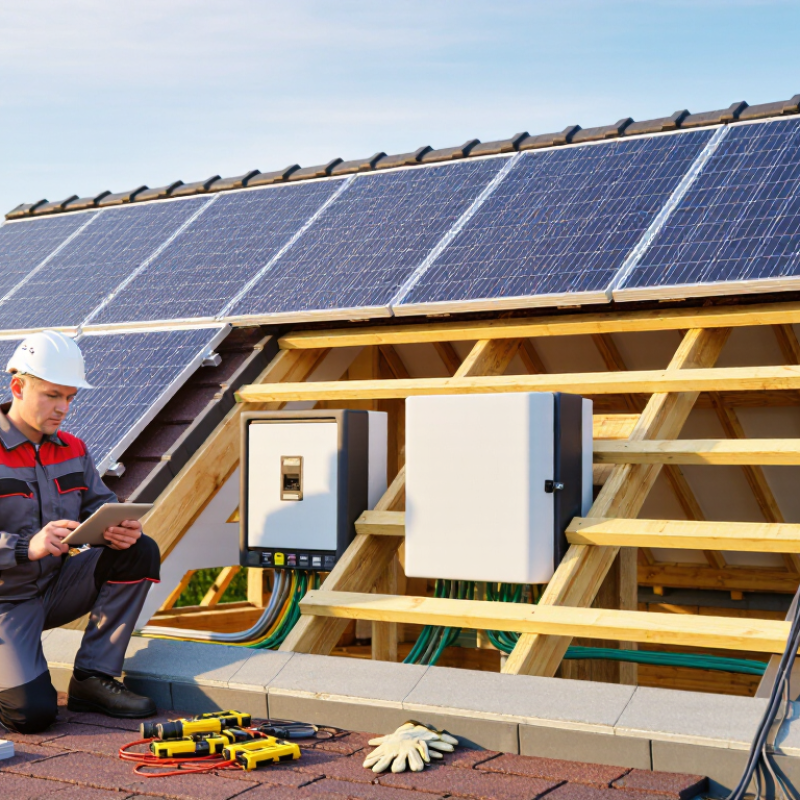
Before adding panels, reconstruct what the current system actually delivers. Gather 12 months of inverter monitoring, utility bills, and outage notes. Compare monthly production with household use, not just the system’s nameplate rating. Start with evidence. Check module age, morning and afternoon shading, roof condition, inverter output limits, and available electrical capacity. Ask a qualified solar electrician to verify the wiring diagram, conductor sizes, grounding, and inverter inputs. Small clues matter. Jordan and Kurtz’s 2013 review in Progress in Photovoltaics examined nearly 2,000 reported degradation rates. The median was about 0.5% annually. This is a fleet-wide benchmark, not a guarantee for one roof; heat, dirt, and local weather can affect actual output.
Define what “more solar” needs to solve. Are bills rising after adding an electric vehicle or heat pump, or is evening backup the priority? Those goals call for different designs. Compare hourly energy use with solar production, then identify when grid imports occur. If daytime exports are already high, extra panels alone may add little useful self-consumption. A battery could help, but check backup loads, inverter compatibility, and usable storage first. A tidy spreadsheet can still miss a shaded corner or an aging inverter. Treat early estimates as provisional, and request a site inspection with a production model based on measured system output. Keep the original design records; they can answer questions faster than memory.
Before adding panels, check the system’s electrical limits, not just the empty roof space. Match the new modules to the inverter’s voltage, current, and MPPT range, and confirm the inverter can handle the proposed DC capacity. Inspect the service panel, breaker ratings, and export settings, too. Small details matter. A mismatch can trigger equipment limits or force costly redesigns.
Grid approval is separate from equipment compatibility. Your utility may require an updated interconnection application, export limits, or specific inverter settings before work begins. Berkeley Lab’s Queued Up 2024 report found more than 2,600 GW of generation and storage capacity waiting in U.S. interconnection queues at the end of 2023. That figure is not a forecast for rooftop projects, but it shows why grid capacity and review timelines deserve attention. Ask the utility what applies to your address.
Check local permit and inspection requirements before ordering equipment. Requirements can differ by city and may cover electrical drawings, roof loading, fire access, and inspections after installation. The IEA PVPS Snapshot 2024 estimated global cumulative solar PV capacity had reached about 1.6 TW by the end of 2023; rapid growth makes consistent planning important, but local rules still govern your project. It is easy to assume an existing permit covers an expansion. It may not. Have a qualified installer compare the proposed design with utility requirements and the authority’s current checklist.
How to Safely Expand a Solar PV System?
Size the Added Panels, Inverter Capacity, and Energy Storage
Before adding panels, review a full year of electricity bills and compare them with your system’s actual production. New modules should match your roof’s sun exposure, orientation, and available space. A shaded section can produce far less than a clear roof. Check the inverter’s input limits and remaining capacity before choosing an array size. A qualified solar professional can assess compatibility and inspect wiring, mounting, and electrical connections.
Size storage around the energy you want to use after sunset or during an outage—not your total daily consumption by default. List essential loads, such as a refrigerator, lights, and a small medical device, then estimate their running hours. Battery capacity and inverter output are different limits: one affects stored energy, the other affects how much equipment can run at once. Estimates are imperfect. I would revisit them after tracking actual use for a few weeks.
Tips: Keep model specifications and production records handy. Ask for calculations showing expected output, inverter loading, and usable battery capacity. Leave room for uncertainty; cloudy weeks happen.
Illustrative sizing examples for added PV panels, inverter capacity, and usable battery storage.
The examples use a PV-to-inverter capacity ratio of about 1.2:1. Battery sizes are illustrative, not determined by PV capacity alone: size storage to the household’s load profile and backup needs. Check existing inverter headroom, equipment limits, electrical rules, and export limits before expanding.
Expanding a solar PV system starts with a site and design review, not extra panels on the roof. IEA PVPS estimated that global installed PV capacity reached about 1.6 terawatts by the end of 2023. That scale makes careful system integration essential, even for a modest home upgrade. Check roof condition, structural capacity, fire access, and the existing system’s single-line diagram. Confirm that the inverter can accept the added strings and that voltage, current, cable ratings, and protection devices remain within their limits. A tidy drawing can still miss an old connection.
Electrical isolation needs equal care. Switching off the AC supply does not make sunlit PV modules or their DC wiring voltage-free. A qualified professional should follow the equipment’s shutdown sequence, isolate all relevant sources, apply lockout procedures, and verify conditions with appropriately rated test equipment. Follow specified discharge times and use suitable protective equipment. Do not assume the original labels match the wiring; check them against the actual array.
Integration should include commissioning checks and clear records. NREL’s Best Practices for Operation and Maintenance of Photovoltaic and Energy Storage Systems emphasizes planned inspections, documentation, and performance monitoring. Record string layouts, protection settings, test results, and updated diagrams, then compare system output with expected performance. Small mismatches can be easy to overlook. They deserve a second look.
| Stage | Key tasks | Safety controls | Checks and records |
|---|---|---|---|
| 1. Assess the existing system | Review the one-line diagram, equipment ratings, array layout, operating history, and available roof or ground space. | Have the assessment completed or reviewed by a qualified solar professional; do not assume an existing installation is compliant or correctly documented. | Record existing module and inverter specifications, circuit configuration, protective devices, and any visible damage or unapproved alterations. |
| 2. Confirm capacity and compatibility | Check inverter input limits, string voltage and current, MPPT availability, conductor and connector ratings, and any export or utility limits. | Use equipment only within its listed ratings and manufacturer instructions. Do not mix connectors or components unless compatibility is expressly confirmed. | Document design calculations, updated circuit diagrams, equipment ratings, and required approvals from the authority having jurisdiction or utility. |
| 3. Plan the work area | Plan access, material handling, weather conditions, fall protection, and the work sequence before installation begins. | Use appropriate fall protection and electrical PPE; keep the work area controlled and follow site-specific safety procedures. Avoid roof work in unsafe weather. | Complete a job hazard assessment and confirm workers are trained for the tasks and access equipment being used. |
| 4. Isolate and verify | Follow the system-specific shutdown and isolation procedure before modifying electrical circuits. | PV modules can produce voltage whenever illuminated. Use lockout/tagout where applicable, identify all energy sources, and verify absence of hazardous voltage with suitable test equipment. Follow equipment instructions and local electrical rules. | Record isolation points and verification. Do not rely on a single switch or assume that a DC circuit is de-energized without testing. |
| 5. Install and connect | Secure mounting, route and support conductors, make approved terminations, and label new circuits and equipment. | Protect wiring from abrasion, water, heat, and mechanical damage. Maintain required clearances and use listed components suitable for the environment. | Inspect mechanical attachment, cable routing, polarity, connector engagement, grounding and bonding, and overcurrent protection against the approved design. |
| 6. Integrate and commission | Reconnect the system using the prescribed startup sequence; check monitoring, inverter operation, and any export-control settings. | Energize only after inspections and required approvals. Keep covers and barriers in place, and restrict access to qualified personnel. | Perform commissioning tests required by the design, equipment instructions, and local rules; investigate abnormal readings, alarms, or heating before handover. |
| 7. Update and maintain | Update system labels, drawings, monitoring records, and the owner’s operating and emergency information. | Explain that PV circuits may remain energized in daylight and that electrical repairs should be performed by qualified personnel. | Provide commissioning results, permits or inspection records where applicable, warranty documents, and a schedule for periodic visual checks and maintenance. |
Safety note: Requirements vary by location and system design. Use a qualified solar and electrical professional, follow the equipment manufacturers’ instructions, and comply with applicable codes, permits, inspections, and utility requirements.
Treat an expanded PV array as a new electrical system, not simply extra panels. Before energizing, verify updated drawings, string polarity, conductor sizing, overcurrent protection, grounding, and disconnect labels. Measure open-circuit voltage and operating current, accounting for irradiance and module temperature. Small mismatches matter. Use qualified personnel and appropriate test equipment.
During commissioning, check insulation resistance, inverter settings, protective-device operation, and communication links. Record results as a baseline, including weather conditions and meter readings. NREL’s review of nearly 2,000 photovoltaic degradation estimates found a median annual rate of about 0.5 percent (Jordan and Kurtz, “Photovoltaic Degradation Rates—An Analytical Review,” 2013). That figure is not a promise for every site; it shows why consistent records help distinguish gradual aging from sudden faults.
After startup, compare daily energy yield with expected output and investigate persistent deviations. Monitor each inverter or string where practical, and set alerts for outages, abnormal voltage, or unexplained production drops. Inspect after storms and check for new shade from nearby growth. The NREL and Sandia report “Best Practices for Operation and Maintenance of Photovoltaic and Energy Storage Systems” recommends structured inspections and performance monitoring. A dashboard can still miss a loose connection. Field checks remain necessary.
Gather 12 months of inverter data, utility bills, and outage notes. Compare monthly solar production with household use. Small clues matter.
Check panel age, shading at different times, roof condition, and inverter limits. A 0.5% annual decline is a broad benchmark, not a promise for your roof.
Compare hourly energy use with solar production. High daytime exports may mean extra panels will not cover evening demand. Not always.
Review roof condition, structural capacity, fire access, electrical capacity, and the existing wiring diagram. A shaded roof corner can change the estimate.
It depends on its inputs and electrical limits. A qualified solar electrician should check compatibility, wiring, and protection requirements.
No. Sunlit panels and their DC wiring may remain energized. Have a qualified professional assess and isolate the system using appropriate procedures.
Keep updated diagrams, string layouts, protection settings, and test results. Clear records save guesswork later.
Compare monitored output with the production estimate and investigate mismatches. A neat spreadsheet can still miss something. Recheck the details.
How to expand a solar PV system safely starts with understanding how the existing system performs and what the expansion needs to achieve, such as supplying more household electricity or supporting energy storage. Review the condition and capacity of the panels, inverter, wiring, and other equipment. Before adding components, confirm that they are compatible with the current system and check applicable grid connection rules and permit requirements.
Next, size the added panels, inverter capacity, and storage to suit the system’s goals and limitations. Plan the installation so that electrical isolation, safe handling, and integration with the existing equipment are addressed. Have qualified professionals carry out electrical work and verify that protective devices and connections are appropriate. Once the expansion is complete, test and commission the system, confirm that it operates as intended, and monitor its performance over time to identify issues early.

SDEV Charger