Efficient monitoring of photovoltaic (PV) string performance is crucial in today's renewable energy landscape. According to a recent report by the International Renewable Energy Agency (IRENA), PV systems can achieve an efficiency improvement of up to 20% with proper monitoring. However, many operators overlook this aspect. Emphasizing monitoring helps identify issues early, leading to reduced downtime.
Dr. Emily Wang, a leading expert in solar energy systems, asserts, “How to monitor PV string performance efficiently is key to maximizing output.” Effective monitoring strategies not only track energy output but also detect faults within strings. Real-time data can guide operators in making informed decisions. This proactive approach can prevent significant energy losses, improving both efficiency and profitability.
Despite advancements, challenges persist in monitoring. Many systems lack integration capabilities. Data visualization tools often present information ineffectively. These factors can hinder a well-rounded monitoring strategy. The industry must address these gaps to truly enhance performance and ensure the longevity of PV systems.
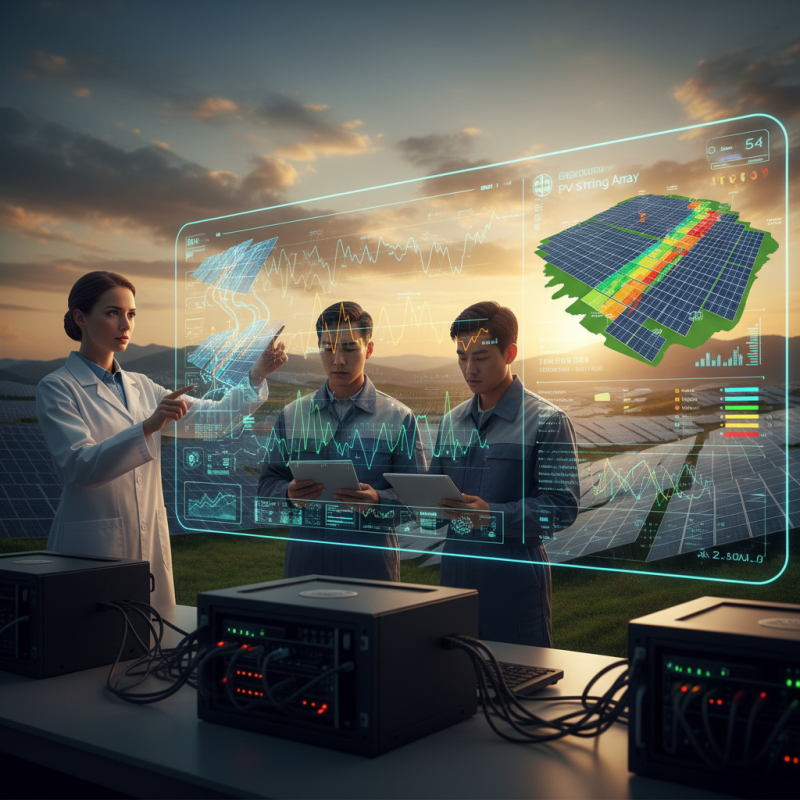
Understanding Photovoltaic (PV) Strings and Their Importance
Photovoltaic (PV) strings are crucial components of solar energy systems. They consist of connected solar panels that convert sunlight into electricity. This conversion process is simple but effective. Monitoring the performance of these strings can significantly impact energy output.
Reports indicate that a well-maintained PV system can achieve over 90% efficiency. In contrast, issues like shading, soiling, or component degradation can drop efficiency to below 80%. A study by the National Renewable Energy Laboratory (NREL) showed that performance monitoring could increase energy harvest by up to 20%. These statistics highlight the importance of regular assessments.
Understanding the common failure modes is essential for optimal performance. Hot spots, for example, can develop due to faulty connections or poor panel quality. This can lead to decreased energy output and potential safety hazards. Moreover, inconsistent production can lead to lost revenue. Adopting a systematic monitoring approach can help mitigate these risks. By analyzing data trends, operators can spot anomalies early. This way, they can ensure that each string operates at peak efficiency. Regular checks are not merely a suggestion; they are necessary for longevity.
How to Efficiently Monitor PV String Performance?
| PV String ID |
Voltage (V) |
Current (A) |
Power Output (W) |
Temperature (°C) |
Efficiency (%) |
| String 1 |
360 |
8.5 |
3060 |
25 |
18.5 |
| String 2 |
355 |
8.7 |
3081.5 |
26 |
19.0 |
| String 3 |
362 |
8.4 |
3041.28 |
24 |
18.2 |
| String 4 |
358 |
8.6 |
3074.88 |
27 |
19.5 |
| String 5 |
363 |
8.8 |
3194.4 |
23 |
20.0 |
Key Performance Indicators for PV String Monitoring
Monitoring the performance of photovoltaic (PV) strings is critical for optimizing energy production. Key Performance Indicators (KPIs) help in assessing this performance. These KPIs include voltage, current, temperature, and energy output. Regularly tracking these metrics can reveal trends and indicate potential issues. A slight drop in voltage may signal a problem with a particular PV module.
Tips: Implement a data logging system to capture performance metrics over time. This allows for better analysis and foresight. Periodic manual checks complement automated monitoring, ensuring no detail is overlooked.
Temperature also plays a vital role. High temperatures can reduce efficiency. Therefore, monitor ambient temperature alongside PV performance. Adjustments may be necessary for optimal conditions. Sometimes, a simple cleaning can improve performance significantly.
Over time, analyzing these KPIs can uncover inefficiencies. Reflect on anomalies in data patterns, as they might indicate underlying issues. Documenting maintenance actions is helpful. A log provides insights into recurring problems and areas for improvement. Continuous evaluation is key to enhancing PV string performance.
Methods and Technologies for Efficient PV String Monitoring
Efficient monitoring of photovoltaic (PV) string performance is crucial for optimal energy generation. The right methods can greatly enhance performance insights. One prominent technology is the use of current and voltage sensors. These devices offer real-time data, allowing for quick assessments of string health. However, improper installation can lead to inaccurate readings. This risk highlights the importance of expert deployment.
Another effective approach involves utilizing remote monitoring systems. These systems collect data over a network, making it accessible from anywhere. This enhances decision-making speed but relies heavily on reliable internet connectivity. A lack of stable connections can hinder performance insights. Integrating machine learning algorithms can further refine data analysis. Such algorithms can identify patterns that human observers might miss, although they require substantial initial data input for training.
Regular maintenance is vital, regardless of the technology used. Scheduled checks help identify issues early. However, maintenance routines can sometimes be neglected due to operational constraints. This oversight can lead to long-term inefficiencies. The balance between technology use and routine inspections is critical for achieving sustained PV string performance. Effective monitoring systems should blend advanced technologies with practical, hands-on maintenance strategies.
Data Analysis Techniques for Evaluating PV String Performance
Monitoring photovoltaic (PV) string performance is crucial for optimal system efficiency. Data analysis techniques play a vital role in assessing these systems. One effective method is the use of statistical analysis to compare individual string outputs. By evaluating voltage and current readings over time, one can spot irregularities. This helps identify underperforming panels or faulty connections.
Machine learning algorithms can enhance performance monitoring as well. These methods can predict future energy output based on historical data. This adds an extra layer of accuracy to your evaluations. However, implementing these tools might pose challenges. Data integrity is crucial; inaccurate readings can lead to misguided conclusions. It’s essential to consistently calibrate sensors and verify data sources.
Visualization techniques also provide insights into PV string performance. Data dashboards can highlight trends and anomalies effectively. Yet, too much data can overwhelm users. It's important to focus on key performance indicators for clarity. By prioritizing relevant metrics, operators can quickly address performance issues. This avoids wasting time on less critical data points.
Regular revisiting of these metrics ensures the monitoring process remains effective.
Troubleshooting Common Issues in PV String Monitoring Systems
Monitoring PV string performance requires attention to detail. Common issues can disrupt efficiency and impact energy yield. One frequent problem is shading. Even partial shading can significantly reduce output. Regular inspections can help identify shaded areas. Look for trees, buildings, or debris obstructing sunlight.
Another issue may arise from connections and wiring. Loose connections can cause power losses. Regularly check connections to ensure tightness. Inspect wires for damage or wear. Over time, UV exposure and environmental factors can degrade wiring. Noticing these issues early can prevent costly repairs.
Data monitoring is essential. Ensure that your monitoring system is functioning correctly. Analyze data trends for irregularities. Sudden drops in output may indicate a malfunction. These observations require timely action. Yet, many overlook the importance of consistent data review. Ignoring patterns can lead to bigger issues. Reflecting on monitoring routine is crucial for smooth operation.
FAQS
: KPIs include voltage, current, temperature, and energy output. They help assess performance.
A data logging system captures metrics over time, aiding in trend analysis and foresight.
High temperatures can reduce efficiency. Monitor ambient temperature alongside PV performance for optimal conditions.
Shading, loose connections, and wiring damage can disrupt PV performance and energy yield.
It compares string outputs over time, revealing irregularities and identifying underperforming panels.
Data integrity is crucial. Inaccurate readings lead to misguided conclusions. Regular calibration is needed.
Data dashboards highlight trends effectively. However, excessive data can overwhelm users. Focus on key metrics.
Regular checks help identify shading and wiring issues early, preventing costly repairs down the line.
Revisit metrics regularly and reflect on data patterns. Consistent review avoids overlooking important details.
It documents maintenance actions and reveals recurring problems, guiding areas for improvement and efficiency.
Conclusion
Monitoring the performance of photovoltaic (PV) strings is crucial for optimizing energy production and ensuring the longevity of solar power systems. To effectively address the query of "how to monitor PV string performance efficiently," it is essential to understand the fundamentals of PV strings and their significance. Key Performance Indicators (KPIs) should be identified to gauge performance accurately.
Various methods and technologies, such as real-time data logging and thermal imaging, can enhance the monitoring process. Furthermore, employing data analysis techniques enables the evaluation of PV string performance, helping to identify inefficiencies. Common issues in monitoring systems, including wiring faults or component malfunctions, can be troubleshot with a systematic approach. By integrating these strategies, stakeholders can ensure a robust monitoring framework that maximizes the output and sustainability of solar energy systems.

 SDEV Charger