How to Choose the Best Solar Panel Connectors from China

Time:2026-09-21 Author:Sophia
0%

Choosing the right connector can determine whether a solar array performs reliably for decades or develops hidden faults within months. This guide, “How to Choose the Best Solar Panel Connectors from China,” examines the practical details behind that decision.

John Wiles, a respected photovoltaic safety educator, often emphasized, “A PV system is only as strong as its weakest component.” His warning remains relevant when comparing Chinese suppliers, product specifications, and factory quality controls. A connector may look identical to an established MC4-style product, yet its materials, sealing, contact pressure, and testing history can differ significantly.

This is where How to choose connectors for solar panels becomes a technical question, not a simple purchasing exercise. Buyers should check voltage and current ratings, temperature tolerance, IP protection, UV resistance, and compatibility with the cable size. The metal contact should grip firmly, without looseness or visible deformation. The housing should close with a clear, positive click.

Factory evidence matters too. Request datasheets, test reports, batch traceability, and samples from the same production line. Do not rely on attractive photographs or the lowest quotation. That approach can fail.

A careful evaluation should also consider crimping tools, installer training, replacement availability, and long-term outdoor exposure. I would not pretend every supplier presents information equally clearly. Some specifications need closer questioning. Others may change between batches.

This article will help buyers compare Chinese connector manufacturers with greater confidence. It focuses on field experience, electrical safety, mechanical durability, and evidence-based selection. The best connector is not merely inexpensive. It is compatible, traceable, correctly installed, and proven under real photovoltaic conditions.
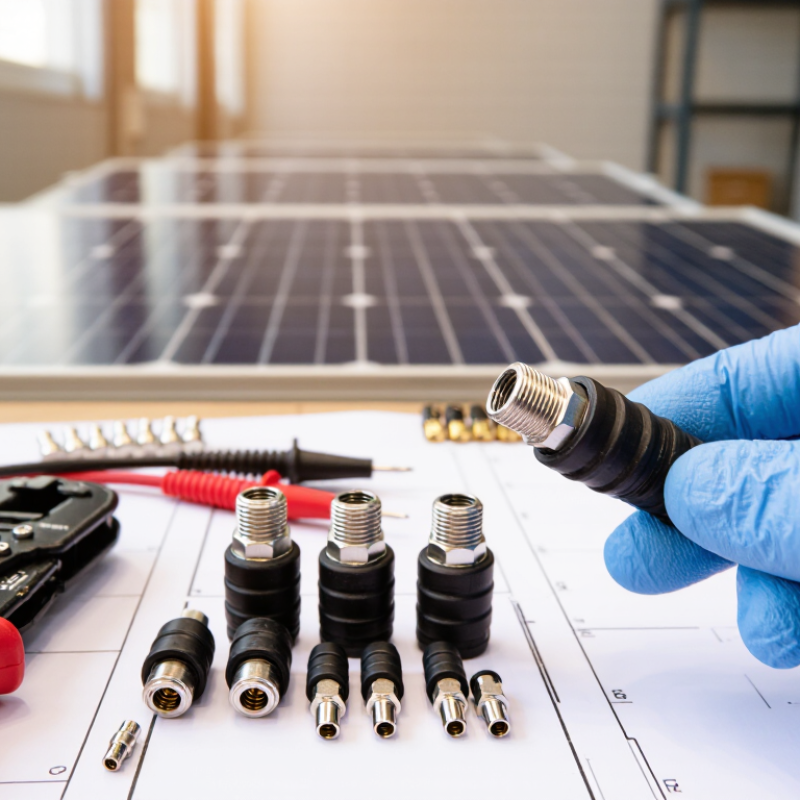
How to Choose the Best Solar Panel Connectors from China

Solar Panel Connector Types and Their Core Differences

How to Choose the Best Solar Panel Connectors from China

Solar panel connectors differ by structure, purpose, and installation method. Standard inline connectors join panel cables through male and female locking ends. They usually suit simple string connections. Branch connectors use Y or T shapes. They combine two or more circuits and can reduce cable clutter. Inline fuse connectors add overcurrent protection near the panel. Panel-mount connectors fit through an enclosure wall and provide a fixed connection point. Each type has a different job.

The core differences often appear inside the housing. Crimp contacts can provide stable conductivity when matched with the correct cable and tool. Screw terminals allow easier adjustment, but outdoor vibration may create maintenance concerns. Check rated voltage, current, cable size, contact material, and sealing level. A connector should match the cable diameter tightly. Loose seals can admit water after repeated heating and cooling. Locking force also matters. A weak latch may separate during installation.

When sourcing from China, request samples, test reports, dimensional drawings, and production traceability. Inspect contact plating, plastic strength, and cable entry seals. Do not rely only on photographs. A useful field lesson is simple: similar-looking connectors may not mate safely. I would also avoid mixing unverified connector families, even when their shapes appear identical. My selection process is not perfect; supplier documents can contain unclear ratings. Ask precise questions, record the answers, and verify them against physical samples before ordering in volume.

Key Specifications for Matching Connectors to Solar Systems

How to Choose the Best Solar Panel Connectors from China

Matching connectors to a solar system starts with electrical specifications, not appearance. Check the connector’s rated voltage and current against the panel string’s maximum values. Leave a safety margin for cold-weather voltage increases and strong sunlight. A connector rated too close to the operating limit may heat up during peak production.

Wire size matters too. Match the connector contact barrel to the cable cross-section, such as 4 mm² or 6 mm². An incorrect crimp can create resistance, heat, and gradual power loss. Use a calibrated crimping tool and inspect the finished joint. It should hold firmly without cutting the conductor strands. Small details matter.

Environmental ratings deserve equal attention. Select UV-resistant materials, an operating temperature range suited to the installation site, and an ingress rating of at least IP65 for exposed areas. Outdoor connectors should meet recognized requirements, such as IEC 62852, and include clear polarity markings. Confirm mating compatibility through the supplier’s drawings; similar-looking housings may not connect safely. Ask for test reports, material data, batch traceability, and samples before placing a large order. A sample can pass indoors yet fail after thermal cycling or water exposure. That is an uncomfortable possibility, but it is why field testing should not be skipped. Inspect the locking mechanism, seals, contact plating, and cable entry under realistic installation conditions.

How to Assess Chinese Connector Manufacturers and Suppliers

China’s solar connector sector deserves careful supplier screening. The IEA PVPS Trends 2024 report recorded 216.9 GW of new solar capacity in China during 2023. This scale supports strong manufacturing experience, but capacity alone proves little.

Request the supplier’s IEC 62852 test reports for photovoltaic connectors. Check testing laboratories, report numbers, dates, and sample descriptions. Ask for material certificates covering copper, plating, insulation, and sealing compounds. A factory audit should include crimping lines, torque controls, warehouse humidity, and batch traceability. Inspect production samples yourself. Small defects matter.

Measure connector fit with the intended cable. Check contact resistance, locking force, IP protection, and thermal cycling results. The IEC 62852 standard addresses electrical, mechanical, and environmental performance. TÜV Rheinland’s SolarGrade data also emphasizes connector reliability as a recurring field concern. Do not accept generic statements such as “100% compatible.” Compatibility must be verified through documented testing.

Review at least three years of delivery records and complaint handling. Ask whether rejected batches receive root-cause reports. A polished audit can still miss rushed production. That weakness deserves attention. Compare promised tolerances with actual samples from different cartons. Some suppliers communicate well but lack stable process control. Others offer excellent testing but respond slowly after shipment. A practical scorecard should weigh certification, consistency, traceability, response time, and total delivered cost, not price alone.

Quality, Safety, Certification, and Compatibility Checks

How to Choose the Best Solar Panel Connectors from China

Quality, Safety, Certification, and Compatibility Checks

Choosing solar panel connectors from China requires more than comparing prices. In field inspections, I check housing strength, contact plating, seals, and crimp consistency. A connector should close firmly without excessive force. Its seal must resist dust, moisture, and temperature changes. Small defects can create heat at the connection point. That heat may damage cables or reduce system performance. Ask for production samples, not only catalog photographs. Inspect several pieces from different batches. One sample can mislead you.

Certification needs careful verification. Request current test reports, certificates, and factory quality records. Check whether the documents match the exact connector model, rated voltage, current, and application. A printed certification mark is not enough. Confirm the issuing laboratory and report number independently. I once found a supplier using an outdated document for a revised product. It looked convincing. It was not sufficient. Traceable materials and documented inspections offer stronger evidence of reliability.

Compatibility is equally important. Similar-looking connectors may not be safely interchangeable. Check dimensions, locking design, conductor size, crimp tooling, and electrical ratings. Test the connector with the actual module, cable, and inverter system. Include pull-force, insulation, water-resistance, and temperature-cycle tests. Ask for written compatibility confirmation. Do not rely on “universal” wording. That shortcut can become an expensive mistake. A qualified supplier should answer technical questions clearly and provide repeatable quality controls.

Ordering, Testing, and Inspecting Solar Panel Connectors from China

How to Choose the Best Solar Panel Connectors from China

Ordering solar panel connectors from China should begin with technical evidence, not attractive pricing. The IEA PVPS Trends in Photovoltaic Applications 2024 reported more than 440 GW of new solar capacity in 2023. That scale increases demand for stable, traceable components. Request connector drawings, material grades, plating details, rated current, and production batch records. Confirm that the connector design follows IEC 62852 requirements. Ask for samples from normal production, not specially prepared samples.

Test before scaling. Test contact resistance, mating force, polarity, crimp pull strength, and insulation performance. Thermal cycling, humidity exposure, UV aging, and water-ingress checks should match the project environment. The IEC 60529 IP rating needs verification after testing, not only from a certificate. Fraunhofer ISE’s 2024 Photovoltaics Report shows leading commercial modules exceeding 23% efficiency. Higher module output can increase connector heating when contact quality is poor.

Inspect each incoming batch visually and dimensionally. Check housing cracks, loose terminals, incomplete crimps, and inconsistent locking. Keep photographs and test records. A clean sample can still hide weak process control. That mistake is expensive. Use an independent laboratory for disputed results, especially when supplier documents conflict. I would also repeat sampling after any material, tooling, or subcontractor change. This step feels slow. It protects the installation.

How to Choose the Best Solar Panel Connectors from China - Ordering, Testing, and Inspecting Solar Panel Connectors from China

A practical comparison framework for sourcing, validating, and inspecting photovoltaic connectors without relying on company or brand information.

Stage Evaluation Dimension What to Specify or Check Typical Reference Requirement Recommended Evidence Acceptance Guidance
Ordering Connector Compatibility Define the required mating interface, contact arrangement, cable cross-section, and assembly method. Avoid using connectors that only appear mechanically similar. The connector, cable, crimp contact, and mating component should be specified as one compatible system. Product drawing, mating instructions, cable range, and assembly manual. Reject products without clear compatibility information or controlled mating requirements.
Ordering Rated Voltage Match the connector rating with the maximum photovoltaic system voltage, including the applicable system design margin. Common photovoltaic connector ratings are 1,000 V DC or 1,500 V DC; the exact rating must be verified on the technical datasheet. Datasheet, marking photographs, and applicable test report. The marked rating must meet or exceed the project voltage requirement.
Ordering Rated Current Consider continuous operating current, conductor size, ambient temperature, and any derating requirements. Common ratings are approximately 20 A to 45 A, depending on the contact design and cable size. Current-rating table, temperature-derating curve, and conductor compatibility chart. Use the lower applicable rating when cable size, temperature, and connector ratings differ.
Ordering Applicable Standards Confirm that the connector is designed and tested for photovoltaic applications rather than general low-voltage wiring. IEC 62852 is the principal international standard for DC connectors used in photovoltaic systems. UL 6703 may apply to North American projects. Valid standard-specific certificate or test report with matching model and revision. Check that the certificate scope, product model, ratings, and factory information correspond to the supplied item.
Ordering Environmental Protection Review resistance to water ingress, dust, ultraviolet exposure, humidity, salt mist, and outdoor temperature cycling. IP65, IP67, or IP68 may be specified depending on the design and test conditions. IP ratings do not automatically cover every outdoor exposure. Ingress-protection report, material data, UV-resistance information, and sealing specification. Confirm the rating applies to the fully mated connector, not only to an unmated housing.
Ordering Operating Temperature Compare the stated operating range with the lowest and highest temperatures expected at the installation site. A common photovoltaic range is approximately −40 °C to +85 °C, subject to the product design. Datasheet, temperature-cycle test record, and material information. The specified range should cover the project environment without exceeding cable or seal limitations.
Ordering Material and Contact Plating Identify the housing polymer, seal material, conductor material, and contact-plating system. Materials should be suitable for outdoor photovoltaic service, with stable contact performance and flame-retardant properties where required. Material declaration, safety data, plating specification, and flame-rating information. Reject vague descriptions such as “high-quality metal” without material and plating details.
Ordering Order Quantity and Packaging Set the sample quantity, production quantity, spare ratio, packing method, labeling, and lot traceability requirements. Packaging should prevent deformation, contamination, moisture exposure, and mixing of different connector versions. Approved packing specification, carton labels, lot-code format, and packing photographs. Require model, quantity, production lot, and inspection status on each shipping unit.
Testing Visual and Dimensional Inspection Inspect housing geometry, locking features, seals, contact orientation, cable entry, markings, and critical dimensions. No cracks, flash, deformation, contamination, missing seals, incomplete markings, or damaged locking features. Approved drawing, control plan, calibrated measurement records, and inspection photographs. Critical dimensions must remain within the approved drawing tolerances.
Testing Crimp Quality Verify conductor strip length, crimp height, crimp width, pull force, strand capture, and absence of damaged strands. The crimp must meet the contact manufacturer’s specified dimensions and minimum mechanical requirements. Crimp-height records, cross-section samples, pull-test results, and applicator settings. Do not approve loose strands, under-crimping, over-crimping, or conductor damage.
Testing Contact Resistance Measure resistance through the mated connector using a controlled current and a calibrated low-resistance instrument. The measured value should comply with the applicable standard and approved product specification; lower and stable resistance is preferred. Test method, instrument calibration certificate, sample identification, and resistance readings. Investigate abnormal variation, heating, oxidation, or increasing resistance after cycling.
Testing Insulation Resistance Test insulation between contacts and between live parts and accessible surfaces under the specified test conditions. The result must satisfy the applicable photovoltaic connector standard and product specification. Voltage setting, test duration, environmental conditions, and recorded results. Any breakdown, flashover, or result below the approved limit is a failure.
Testing Dielectric Withstand Apply the specified test voltage to verify that insulation tolerates electrical stress without breakdown. Use the voltage, duration, and leakage-current limit required by the applicable standard or approved test plan. Hipot test record, equipment calibration, test fixture details, and failure log. No arcing, flashover, insulation puncture, or unacceptable leakage is permitted.
Testing Mating and Unmating Force Measure assembly, locking, and separation forces using the specified mating tools and cable configuration. Forces should remain within the approved design range and should not damage the latch or housing. Force-displacement results, tool identification, sample count, and cycle history. Reject connectors that cannot fully lock, are excessively loose, or require unsafe force.
Testing Mechanical Cable Retention Apply the specified axial pull to confirm that the cable, crimp contact, seal, and housing remain secure. The assembly must withstand the applicable standard’s pull requirement without contact displacement or seal failure. Pull-test setup, load value, holding time, sample photographs, and result record. No cable pull-out, contact movement, housing damage, or loss of sealing is acceptable.
Testing Thermal and Current Cycling Evaluate temperature rise and electrical stability under rated current and repeated heating and cooling conditions. Temperature rise and resistance change must remain within the applicable standard and approved specification. Current level, ambient temperature, thermocouple locations, cycle count, and before-and-after measurements. Investigate hot spots, discoloration, melting, loosening, or significant resistance growth.
Testing Environmental Aging Review or conduct humidity, temperature cycling, UV exposure, salt mist, and water-ingress testing as appropriate for the site. The connector should retain mechanical, electrical, and sealing performance after the required exposure sequence. Independent or laboratory test report with sample traceability and test conditions. Post-aging performance must remain within the original acceptance limits.
Inspecting Pre-Production Sample Approval Approve a representative sample before mass production, including the exact materials, tooling, markings, and packaging intended for shipment. The approved sample becomes the visual, dimensional, and functional reference for production inspection. Signed sample approval record, master sample, drawings, and inspection checklist. Do not allow material or tooling substitutions without documented approval.
Inspecting Incoming Material Control Verify incoming polymers, seals, contacts, plating, cables, and packaging against approved specifications. Material identity, batch information, and supplier documentation should be traceable to the finished lot. Incoming inspection records, certificates of analysis, and batch traceability documents. Quarantine unidentified, mixed, expired, or visually inconsistent materials.
Inspecting In-Process Quality Control Monitor injection molding, terminal stamping, plating, crimping, assembly, and sealing operations. Critical process parameters should have defined limits, inspection frequency, and reaction plans. Process control plan, first-piece approval, patrol inspection records, and corrective-action reports. Stop or contain production when a critical parameter exceeds its defined limit.
Inspecting Final Random Inspection Inspect quantity, appearance, dimensions, functionality, labels, carton condition, and sample electrical performance before shipment. Use a documented sampling plan with separately defined critical, major, and minor defect limits. Final inspection report, sampling basis, defect photographs, and shipment release approval. Critical defects should have zero acceptance; major and minor limits must be agreed before ordering.
Inspecting Traceability and Change Control Require lot codes, production dates, tooling identification, revision control, and notification of design or material changes. Every shipment should be traceable to a production lot and inspection record. Lot labels, change-notification procedure, revision history, and retained samples. Reject untraceable goods or undocumented substitutions.
Inspecting Shipment Release Release goods only after document review, inspection completion, packaging verification, and resolution of nonconformities. The shipped model, quantity, ratings, labels, and packaging must match the approved purchase order. Signed release checklist, packing list, inspection report, and nonconformity closure evidence. Hold shipment until all critical issues are corrected and verified.

Important: The reference values above are common comparison points, not universal approval limits. Always use the applicable project specification, current standard, certified test method, and the connector manufacturer’s approved datasheet for final acceptance.

FAQS

What are the main types of solar panel connectors?

Inline connectors join panel cables with locking male and female ends. Branch connectors combine circuits in Y or T shapes. Inline fuse connectors add nearby overcurrent protection. Panel-mount connectors create fixed enclosure connections.

When should I use branch connectors?

Use them when several circuits must meet neatly. They can reduce cable clutter. Check current ratings carefully. More connections also mean more inspection points.

Why do connector materials and terminals matter?

Crimp contacts can provide stable conductivity with the correct cable and tool. Screw terminals allow adjustment. Outdoor vibration may loosen them. That creates maintenance risks.

How can I prevent water entering a connector?

Match the connector tightly to the cable diameter. Inspect the cable entry seal closely. Loose seals may admit water after repeated heating and cooling. Small gaps become serious.

Which specifications should I check before ordering?

Check rated voltage, current, cable size, contact material, and sealing level. Also inspect locking force and housing strength. A weak latch may separate during installation. Do not trust appearance alone.

How can I verify a supplier’s product quality?

Request samples, test reports, drawings, and production traceability records. Inspect contact plating, plastic strength, and cable seals. Compare samples from different cartons. Photographs are not enough.

How should I assess a Chinese connector manufacturer?

Review factory crimping lines, torque controls, humidity storage, and batch records. Ask for material certificates and independent test details. Check report dates, laboratory information, and sample descriptions. A large factory may still have weak process control.

How can I confirm connector compatibility?

Test the connector with the exact cable you plan to use. Measure fit, contact resistance, locking force, and sealing performance. Never mix unverified connector families. Similar shapes can mislead.

What should a supplier scorecard include?

Evaluate certification, consistency, traceability, response time, and delivered cost. Review at least three years of delivery records. Ask how rejected batches receive root-cause reports. Price alone is a poor guide.

What common sourcing mistake should buyers reconsider?

Some buyers accept “compatible” claims without physical testing. That approach is convenient, but incomplete. Supplier documents may contain unclear ratings. Ask precise questions, record answers, and verify every important detail.

Conclusion

Choosing the right solar panel connectors from China requires a clear understanding of connector types, system requirements, and supplier reliability. Different connector designs may vary in locking structure, contact materials, current capacity, weather resistance, and installation method. To understand how to choose connectors for solar panels, first match the connector’s voltage, rated current, wire size, temperature range, and environmental protection level with the photovoltaic system. Proper compatibility with panels, cables, inverters, and mounting equipment is essential for safe and stable operation.

When evaluating Chinese manufacturers and suppliers, review their production experience, quality-control procedures, testing capabilities, and technical documentation. Confirm relevant safety certifications, material specifications, flame resistance, sealing performance, and electrical compatibility before placing an order. Request samples, test them under expected electrical and environmental conditions, and inspect production batches for dimensions, contact quality, locking strength, labeling, and packaging. Clear communication, traceable inspection records, and consistent product performance can help reduce installation risks and support dependable long-term solar system operation.

Sophia

Sophia

Sophia is a dedicated marketing professional with an exceptional depth of knowledge about her company's products and services. With a keen understanding of market trends and customer needs, she crafts insightful blog posts that not only inform but also engage readers, enriching the company’s online......